Coffee with OKRs #53 · 6 min read
ESG doesn't start with a report, but with an analysis the company can already do
The reporting obligation directly covers around 4,000 companies in Poland, and that number is misleading. Through the requirement to report on the value chain it indirectly affects around 100,000 entities, and for them it will be enforced not by the legislator but by their own business partners. This is the part of the topic that reaches companies last, usually in an email from a large client.
From the episode · in Polish
An hour and a half on the basics, with a guest from sustainability reporting
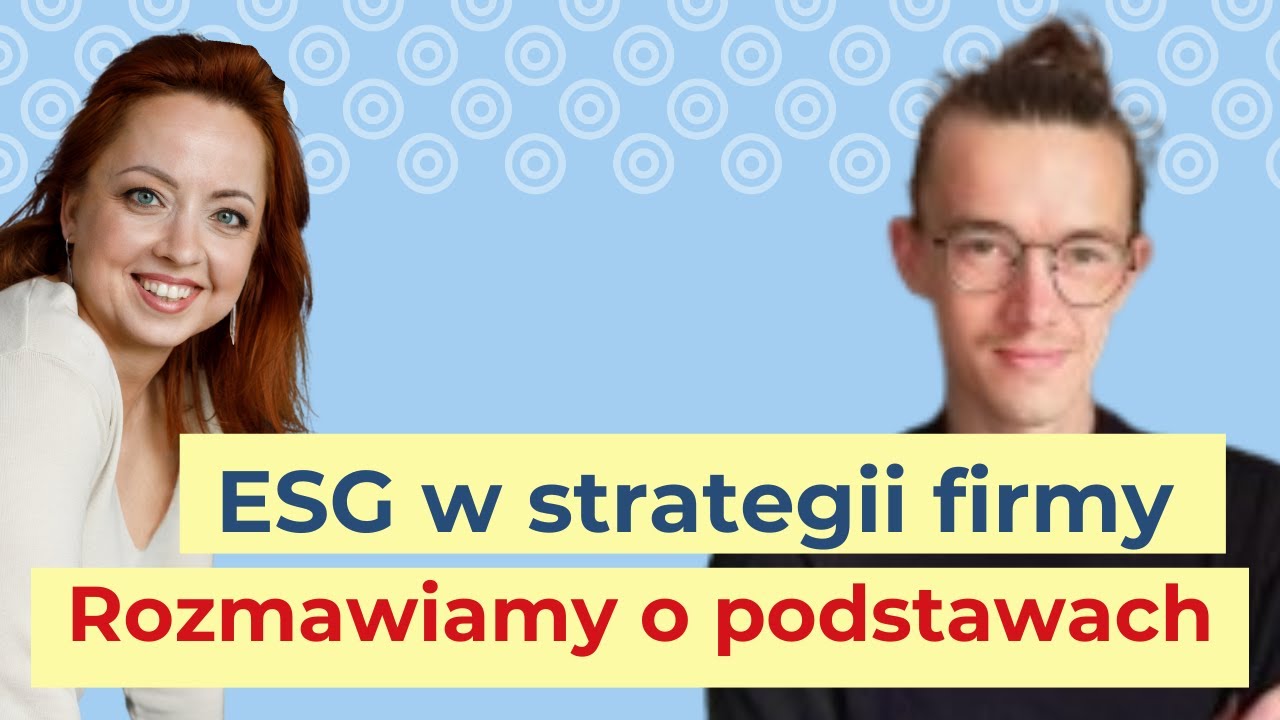
We talk to a practitioner of sustainability reporting, an adviser to listed companies and to firms that report voluntarily. At the start we set out the concepts and show why ESG is not the same as the corporate charity campaigns of old. At around the thirty-sixth minute there is a part on the standards and on the timetable by which successive groups of companies come under the obligation, and from the forty-second comes the most important part of the whole conversation: the double materiality analysis broken down into its components. Towards the end there is a thread on how environmental goals collide with business plans, and three recommendations for getting started. from 00:42:18
 The recording is being edited. Leave your address and you'll get the link when it's ready.
Let's start with what ESG is not in this episode. It is not a collection of green campaigns, nor an obligation stuck on next to the strategy. It is an extension of the same transparency the market once agreed to with financial reporting: that did not always exist either, at some point we decided its benefits outweighed its risks, and legislation followed. Now we are at the same turning point, except that a second dimension is added to the assessment of a company: its impact. It is worth defusing the word itself along the way, because it meets resistance in conversations with boards. In this definition, development means classic business development, that is scale, markets, revenue and profit, and sustainable means keeping a balance between that growth and its social and environmental impact. There is nothing in it against growing.
The point of entry is not a report or a set of indicators, but a double materiality analysis. It examines two things at once: how our activity affects environmental and social issues, and what opportunities and risks those issues bring for our finances. In terms of mechanics it is no different from a classic risk management system, so the company usually already knows how to do it, it has just never looked at itself from this side. It is also the answer to the fear that everyone will produce identical reports to one template. There are twelve standards and around a hundred detailed topics that follow from them, but only an analysis through the lens of a specific business tells you which of them matter in your company and what sustainable development means in that one company. That is why the statutory auditor mainly attests the reliability of this strategic process; in the audit, the indicators themselves weigh less than the path that led to them. A full analysis can take around ten months, three to four as standard, and simplified versions also exist, so scale is no reason not to start at all.
There is one operational consequence, and it is the one that interests us most in this conversation: sustainability goals have to sit on the same list of priorities as business goals. Planned separately, they produce absurdities. The episode gives the example of a company that set its emissions base year just before a series of transformations, and another that set reduction targets while planning to build another factory that would push emissions up. The most interesting thing is where the real barrier to entry lies. Not in the data and not in the costs, but in competence and in understanding the subject at all, because a company that has never looked at itself from this side cannot even name its own opportunities and threats. We listened to this episode ourselves as learners, because reporting is not our territory. We took one thing from it: as long as the conversation stays at the level of ideas and duties, it stays at the level of old-style corporate social responsibility and generates resistance. Change begins the moment someone shows that emissions or working conditions are measurably linked to the bottom line.
Takeaways
Four things to take from this conversation
- 01
A second dimension of assessment, not an add-on
This is not an exceptional intrusion into the freedom to do business, but a repeat of the move that once happened with financial reporting. What changes is that impact is assessed alongside the result.
- 02
Start with a double materiality analysis
Not with a report and not with indicators. Mechanically it is ordinary risk management, so you already have the tools. Only this analysis tells you which topics matter in your company.
- 03
One list of priorities
Environmental goals planned in isolation from business plans topple over on their own: an emissions base year set just before a new investment tells you nothing about the company.
- 04
The barrier is competence, not data
Handing the whole thing to an outside expert solves the first year and leaves the same problem for the second. This is a permanent part of the business model, so the competence has to be built in-house from the start.
The whole topic in one place
What is company strategy?
The point about one list of priorities only makes sense if that list exists somewhere. Where it comes from and what it is made of is the subject of a separate text: in it we break strategy down into a named problem, policies and goals, show a test that tells you whether your company has a strategy or a description of reality, and gather all the episodes on the topic in one place.
Author


Lena Zhukova
founder; strategy workshops, quarterly sessions
Founder of OKR Poland. For twenty years she has worked with boards of companies from 30 to a few thousand people; she wrote dozens of strategies with them and helped implement them in more than 40 organisations.
Next texts by e-mail
The OKR Poland newsletter
We write when we have something to say. To start: eight hours of recording on preparing a company for strategy workshops, plus the OnePager.