Coffee with OKRs #49 · 6 min read
Improving things is easier than choosing a direction, which is why we reach for it so readily
The quickest test of whether a company has a strategy fits into one question asked in the room: what are you doing right now to implement it. In this episode we say there are two answers. Either an awkward silence falls, or people start listing activities that have nothing to do with that strategy at all.
From the episode · in Polish
An hour on operations that pose as thinking about direction
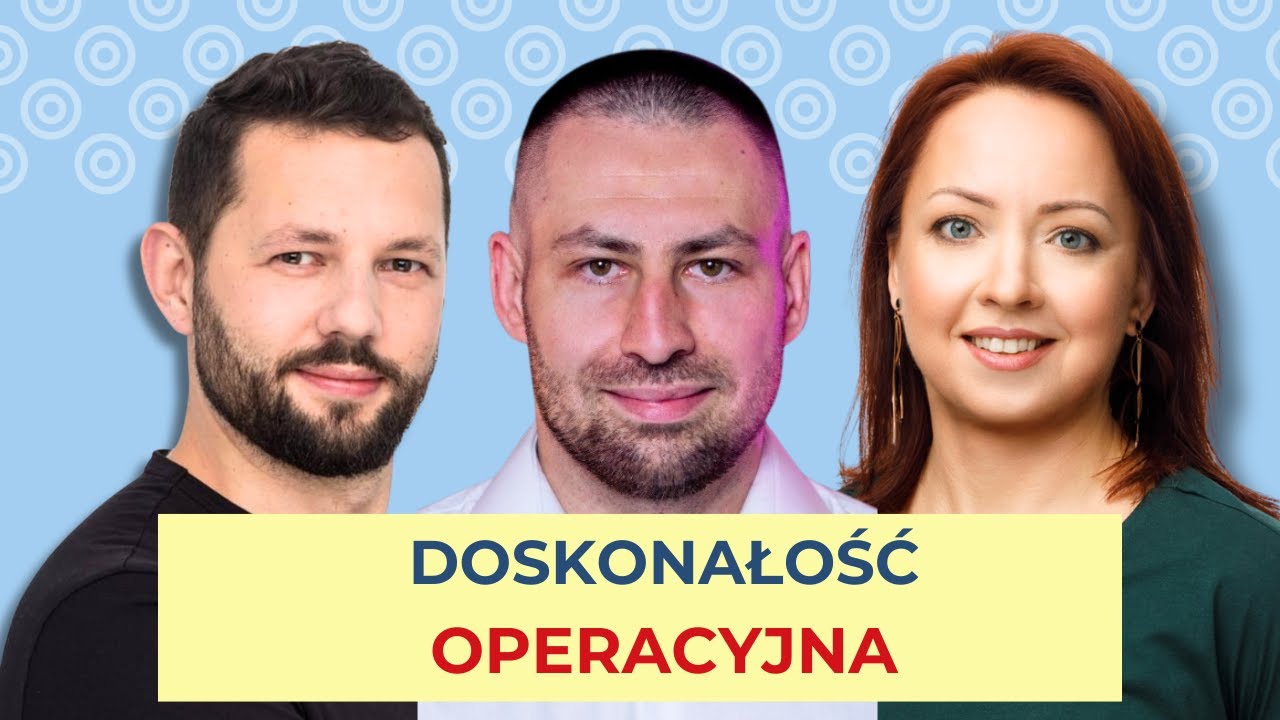
The guest in this episode is a consultant in process and operational management and co-owner of a consulting and technology firm. We begin with that strategy test, then comes the part about why a wall of sticky notes from a workshop doesn't turn into action, in the fifteenth minute the responsibility sheet comes in, and around the twenty-seventh the whole thread on metrics: that companies measure too much, not too little. The strongest part comes near the end, at the fifty-fourth minute, when we hear why improving things is an escape from strategy. A word of warning: the recording has two technical breaks, and two threads come back after a few minutes. from 00:54:34
 The recording is being edited. Leave your address and you'll get the link when it's ready.
Operational excellence is by definition unattainable, and that is not a play on words but the starting premise of the whole conversation. If we will never reach it, the point is not getting there but balancing operational order against growth. In fast-growing companies a bit of creative chaos is actually needed. The practical consequence is simple: we improve what really gets in the way, and if there is no problem, there is nothing to touch. It sounds trite until we ask why companies do the opposite. Because improving is easier. Problems are always at hand, so you can always deal with them instead of thinking about direction, and the time spent tidying up processes is time we don't spend on strategy. What is more, the escape looks like solid work, and that is why it is so hard to name.
The second false trail is setting up strategy and the day-to-day as alternatives you have to choose between. The question is not which to choose. It is whether what we do every day delivers the strategy. If it doesn't, then either the strategy is off target or it hasn't been understood, and the two answers lead to completely different places. Linked to this is a mechanism that comes back several times in the episode: as a company grows, the board's direct communicative influence on the whole organisation drops sharply, so middle management becomes the carrier of the strategy. The board's job stops being talking and becomes making sure that managers understand the strategy and can take that message to their people. The precondition is culture, because a strategy can't be communicated well in a company that, as a rule, communicates little. The second condition is credibility: if the board doesn't take the strategy seriously, there are no grounds to expect that from managers, because people watch what we do, not what we say. A good opening exercise is a responsibility sheet for functions and processes with names on it, after which someone sees their name in ten boxes, and very often it turns out that the CEO is responsible for 80 per cent of the processes and functions.
There is one more claim in this episode that overturns a popular diagnosis. Companies don't measure too little, they measure too much, and that is exactly why they can't turn data into information on which decisions are made. They measure because everyone says you have to measure. The remedy is not another indicator but a review: which metrics are unnecessary, which are missing and how we will know at all that a given thing has worked. From that you then build a tree in which the main metric breaks down into partial ones, each with an owner, instead of throwing everything onto one board dashboard. There is also a habit we know from our own work: we look at the metrics when things are bad, and when things are good we prefer not to understand why, although it is exactly the same lack of understanding of the mechanism, just without the pain. Finally, the most down-to-earth point of the whole conversation. You don't find time for strategic work, you carve it out firmly in the calendar and don't let go of it for several weeks in a row, for example on Fridays from ten in the morning to two in the afternoon. In the episode there is an admission that before that block was fixed in place, the date slipped twice, and that is probably the most honest sentence in the whole recording.
Takeaways
Four things to take from this conversation
- 01
Improve only what gets in the way
Operational excellence as a goal in itself is unattainable, and work on a process without a problem to solve eats the time meant for direction. It also looks like proper work, so it is hard to stop.
- 02
The day-to-day is not an alternative to strategy
The right question is whether daily work delivers the strategy. A negative answer means either that the strategy is off target or that nobody has understood it.
- 03
Strategy lives in middle management
The bigger the company, the weaker the board's direct communicative influence on the whole organisation. Managers become the carriers of the strategy, so their understanding is the first thing to check.
- 04
Too many metrics is the same problem as none
Measuring everything ends in a dashboard nobody makes decisions from. A tree of metrics with owners tells you which factor moved first and gives you someone to ask about it.
The whole topic in one place
What is company strategy?
This text describes one side of the coin: what happens when the strategy already exists and the company still busies itself with something else. The other side, what that strategy should consist of and how to tell that a document lying in a drawer isn't one, is in a separate article. That is also where we have gathered the other episodes in which we come back to this question.
Author


Lena Zhukova
founder; strategy workshops, quarterly sessions
Founder of OKR Poland. For twenty years she has worked with boards of companies from 30 to a few thousand people; she wrote dozens of strategies with them and helped implement them in more than 40 organisations.
Next texts by e-mail
The OKR Poland newsletter
We write when we have something to say. To start: eight hours of recording on preparing a company for strategy workshops, plus the OnePager.