Coffee with OKRs #44 · 6 min read
As long as you hand out tasks, your capacity caps the whole organisation
You want to check whether a particular production line still pays off. You write down what you need for that: a report from sales, costs from production, data from the analyst. You hand out instructions, pull everything back to your desk and analyse it yourself. Now assume the best possible run, in which everyone delivers on time and in exactly the format you expected. All the thinking has still stayed with you.
From the episode · in Polish
The same case played out twice
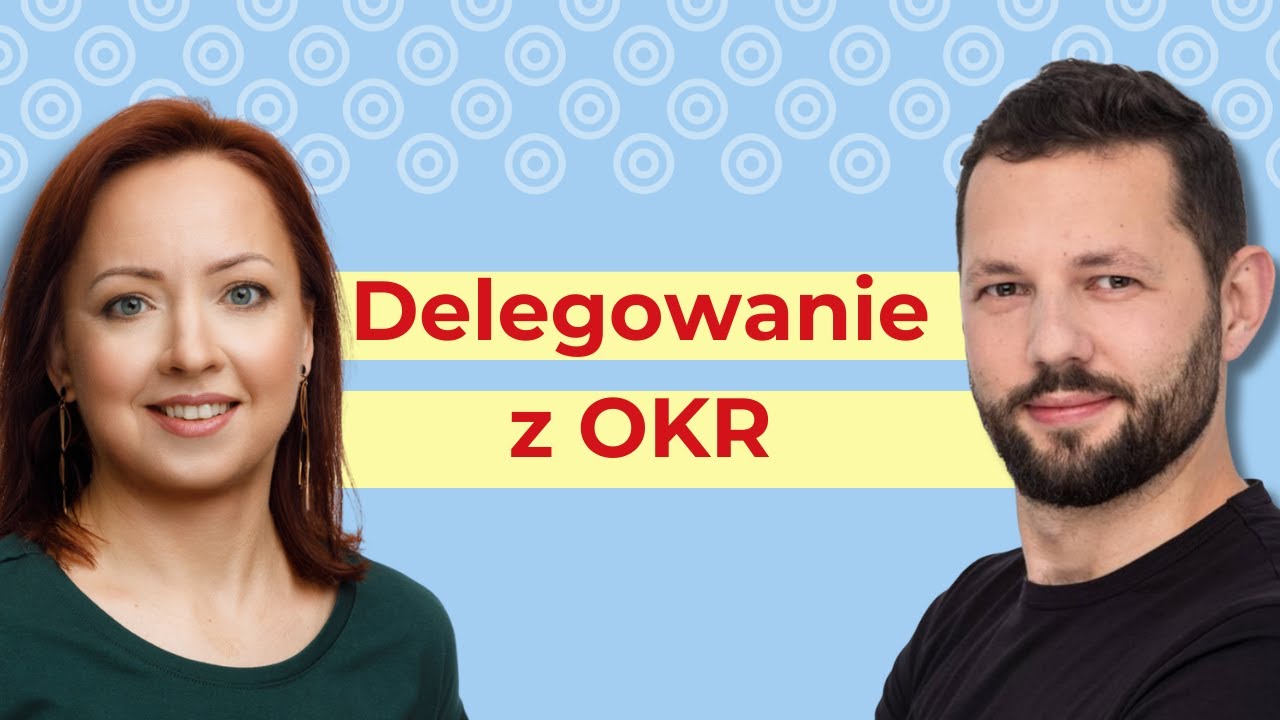
In this episode we take a single situation, looking for a way to improve a product's profitability, and show it in a task-based version and an outcome-based one, then go step by step through the whole delegation process, from defining the outcome to monitoring. The example of context explained to a freelancer comes at around the twenty-fifth minute, and the delegation ladder and the question of the manager's own maturity fill the second half, together with two comments from viewers that moved this thread along. from 00:24:23
 The recording is being edited. Leave your address and you'll get the link when it's ready.
The second version looks almost the same and works differently. You come to the managers not with a list of reports but with context and with the outcome you are after, an improvement in that product's profitability. From that moment the conversation in the meeting is no longer about the format of a report but about ideas. That is the whole difference between delegating tasks and delegating outcomes, and it sounds trivial until you count what you lose along the way. Habit also pulls back towards the old way harder than it seems: in this very conversation the phrase about a task done well keeps coming back by reflex, even while we spend an hour talking about outcomes.
You lose three things. First, you become the bottleneck yourself, because at some point your own capacity turns into the limit of the whole organisation, and it won't go any further until you start working differently. Second, the tasks you handed out came from your assumptions, and you look at the process from above and from a distance, so your idea of a solution can simply miss the mark, even if everyone did their part perfectly. The third is the most costly and the hardest to notice, because it looks like a trait of the team. Complaining that people show no initiative usually describes the style of delegation, not the people. If someone brings an outcome and hears several times in a row that something else was meant, they stop using their own head and start doing exactly what they are told. It is hard to hold that against them afterwards.
OKRs come in through a side door here, and that is the real thesis of this episode. To write a good quarterly objective you have to go through the mission, vision, strategy and annual goals anyway, so along the way you end up with a ready story that can be told in no more than five minutes. That is exactly the material a doer needs to connect the dots instead of waiting for the next instruction. The episode gives the example of a freelancer hired to generate leads: before a word is said about tasks, they get the context of the organisation, the problem to solve and an agreement on an outcome counted as five leads a week, and thanks to that they start proposing solutions themselves. Providing that context is not a courtesy to the team, it is the main job of the board and managers. If they can't pass it on and support people in delivering, they aren't doing their own job.
Takeaways
Four things to do before you hand anything over
- 01
Decide what exactly you are handing over
Research, carrying out a task and responsibility for the result are three different things that call for three different conversations. If you don't name it yourself at the start, the other side will guess, and usually guess differently from you.
- 02
Agree how you will both recognise the outcome
Before anyone starts work. This is the one skipped step that later ends with rejecting the work brought to you with the words that something else was meant. Also ask the other side to say in their own words what they understood; a paraphrase shows the differences straight away.
- 03
Give a start and end date, together with the reason
Not for three months, but from the first of June to the thirtieth of September, with an explanation of why exactly then. A doer who knows the reason protects the deadline themselves or comes with a proposal, instead of explaining themselves after the fact.
- 04
Choose the level of responsibility you hand over after two or three weeks
You can't judge a team's maturity before the start, and between micromanagement and full autonomy lies a whole spectrum, from simple research with the decision on your side to responsibility with no reporting. The question of readiness applies to you as much as to the team, because nobody is good across that whole spectrum.
The whole topic in one place
Effort is not a result (Outcome vs Output). How to show the difference and why it matters
Everything above rests on one distinction: between how much work was done and what changed because of it. Here I use it as a tool rather than explain it. If after this text you feel the problem starts earlier than delegation, already in the way goals are written in your company, a description of that problem, together with a list of all the episodes on the subject, is waiting at a separate address.
Author


Lena Zhukova
founder; strategy workshops, quarterly sessions
Founder of OKR Poland. For twenty years she has worked with boards of companies from 30 to a few thousand people; she wrote dozens of strategies with them and helped implement them in more than 40 organisations.
Next texts by e-mail
The OKR Poland newsletter
We write when we have something to say. To start: eight hours of recording on preparing a company for strategy workshops, plus the OnePager.