Coffee with OKRs #37 · 6 min read
If the problem sits at the bottom of the funnel, you don't need a marketing strategy
In this episode we use the example of a clinic selling laser eye surgery. The company defined its problem like this: fewer and fewer people search for the procedure, and fewer and fewer of those who have decided buy from us. The answer to a question put that way is a bigger advertising budget and better conversion. There is nothing there for a strategy to decide, and that is why most companies don't see why they should have one.
From the episode · in Polish
An hour on two strategies that companies merge into one word
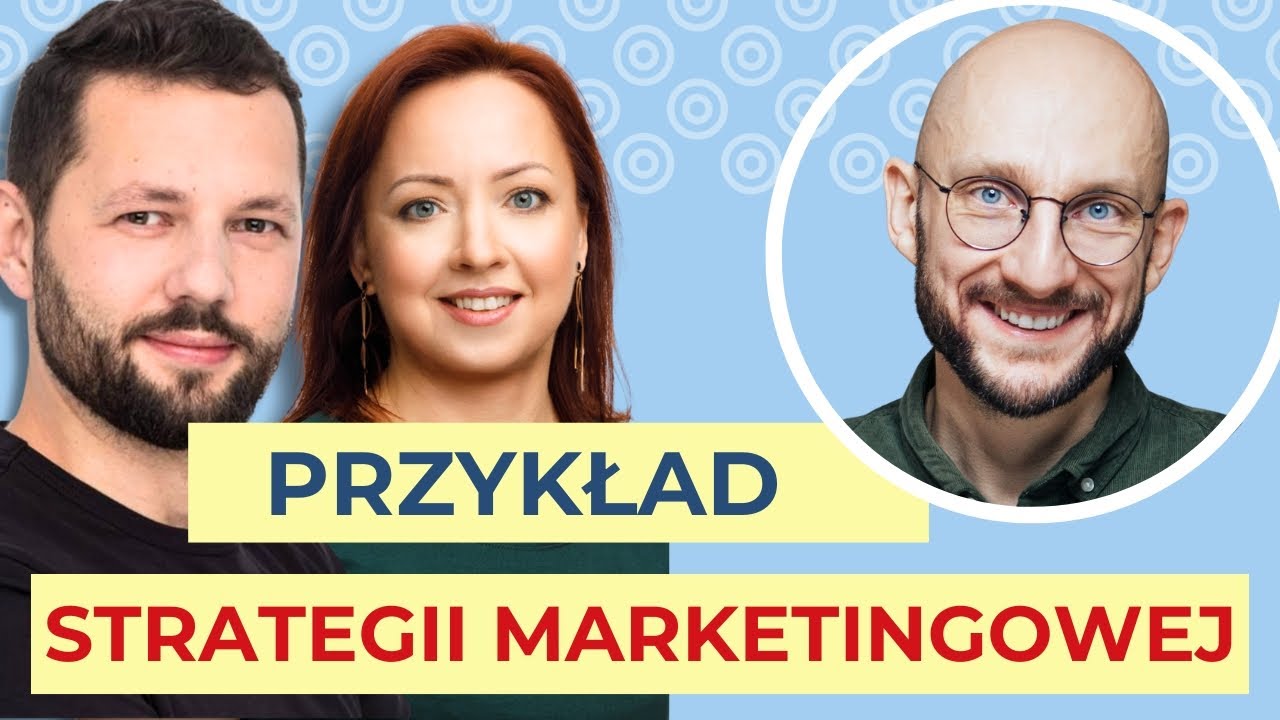
Our guest in this episode is Jacek Kłosiński, a marketer who now works with micro and solo businesses and before that ran a branding agency for six years. In the ninth minute we break company strategy down into a challenge, principles and goals, in the fifteenth we separate it from marketing strategy, in the thirtieth we get into the funnel and where the problem really lies, and from the forty-second comes the most subversive part of the conversation: that the word strategy itself can get in the way, and that it is better replaced with a list of assets to build. from 00:42:12
 The recording is being edited. Leave your address and you'll get the link when it's ready.
Let's start by separating the two, because in companies they sit under one word. The organisation's strategy pulls inwards and answers the question of who we are and where we are heading; its axis is the company and its idea of itself. Marketing strategy pulls outwards, and its focal point is the client, the audience and the market. They share some ground, but they are not the same document and they don't answer the same question. The first also has three layers in a set order: a named challenge or problem, principles that say how we work on it, and only at the end the strategic goals, to which most companies reduce the whole thing. A goal like let's grow threefold or let's hire more people decides nothing, because nobody declares that this year they want lower revenue. That is wishful thinking, not a choice.
Now the thing that makes this episode more than a tidying-up of terms. Most companies that struggle with marketing talk to people who are already aware, people who know they want that kind of service. That is the bottom of the funnel and a red ocean: a hundred other companies talk to the same audience, with practically the same message. All the power of marketing lies higher up, among less aware people, simply because there are more of them, and the question is how to tell them, explain, educate and build a relationship so that they come to understand on their own that they need it. The episode gives a simple example of this shift: an office cleaning company can talk to those who already feel the mess, or about the higher productivity of people working in a tidy space, that is, to someone who isn't looking for a cleaning company yet. Hence the three levels of a good marketing strategy: fit, meaning segments and value proposition; packaging, meaning positioning and tone; and only at the end reach, meaning channels. Clients come with the third and neglect the first two.
In the end both strategies require the same move, and it is their hardest part: exclusion. The organisation decides what it will not do. Marketing decides what we are not and whom we don't talk to, which by definition turns away part of the audience. The episode gives the example of a public statement written plainly: we don't want a big office or dozens of employees, and we won't help you build a corporation. The harder we try to convince everyone who could in theory benefit, the less effective we are. And that leads to the most subversive idea of the whole conversation, one we ourselves are uncomfortable with, because we have the word on our sign above the door: strategy can get in the way, and sometimes it is better not to call it that. It carries a load of associations, it triggers the reflex that there is no time for planning, and it forces an extra level of approval. A better unit of work is often a concrete marketing asset: a one-sentence description of the company, a landing page, an email sequence, a webinar presentation. To make it coherent you have to settle the positioning anyway, so the strategy gets made along the way. A document in a drawer never gets made at all.
Takeaways
Four things to take from this conversation
- 01
These are two different conversations
The organisation's strategy answers the question of who we are and where we are heading. Marketing strategy starts from the client and the market. They have one thing in common: who our audience is, and there both must say the same thing.
- 02
Check at what height of the funnel your problem sits
At the bottom, budget and conversion are enough, because people already know what they want. If the problem is higher up, among the unaware, adding more adverts won't move it, even though it looks like the fastest route.
- 03
Fit, packaging, reach, in that order
Clients come with channels, because that is the visible part of marketing. A channel chosen without a value proposition and without positioning carries out into the world a message nobody has settled.
- 04
Exclusion is the whole job
Writing plainly whom you won't help sounds like losing part of the market, and it is part of positioning. Wanting to convince everyone who could in theory benefit lowers the effectiveness of your communication.
The whole topic in one place
What is company strategy?
Both strategies in this episode rest on one move, exclusion, and that move is the subject of a separate text. In it we show what company strategy is made of, why the test for it is: tell us what you don't do, and what companies bring instead of one. At the bottom of that text you will find the other episodes on this thread.
Author


Lena Zhukova
founder; strategy workshops, quarterly sessions
Founder of OKR Poland. For twenty years she has worked with boards of companies from 30 to a few thousand people; she wrote dozens of strategies with them and helped implement them in more than 40 organisations.
Next texts by e-mail
The OKR Poland newsletter
We write when we have something to say. To start: eight hours of recording on preparing a company for strategy workshops, plus the OnePager.