Online OKR workshop · 26–27 November 2026 · in Polish
Learn and implement OKRs
Two days of workshops and one hundred per cent practice. Lena Zhukova takes you through what decides whether working with OKRs succeeds: from the goal of the implementation, through writing objectives and metrics, to planning, reviews and retrospectives.
Next edition
What you take away
Four things you leave with after two days
- 01
You know how to implement OKRs where you are
In a company, a product or a single team. We show both paths: for those just starting to work with OKRs and for those who want to roll them out across the whole company.
- 02
You can write objectives and metrics that lead to action
Outcome-focused objectives, metrics, a work plan, monitoring, lessons learned and working with the team. On our own OKR implementation framework, proven in practice.
- 03
You have templates and materials to use straight away
Plenty of real-life tips, ready-made templates and materials you can use in your own company right after the workshop.
- 04
You stay in the participants' group
A closed group where participants share knowledge and support each other after the workshop too.
Agenda
Two days, six hours each
Day 1
Thursday, 26 November · 9:00–15:00 CET
- 01
Workshop kick-off
Welcome, organisational matters and getting to know the participants.
- 02
Exercise: the goal of the OKR implementation
The goal of the implementation is one of the key elements. We practise defining it for your organisation or team.
- 03
How to write good OKRs
Where OKRs sit in an organisation next to mission, vision and strategy, the questions for shaping a strategy, and writing OKRs. We discuss the results and write them again. We spend a good deal of time on this, because it is an important part of the workshop.
- 04
Metrics
KPIs, leading and lagging metrics: how to find them, how to build them and connect them with each other.
- 05
The OKR cycle and structure
The stages of getting started: choosing the right cycle, the structure of OKRs, where to start, roles and responsibilities.
- 06
Communication
What to communicate, to whom, when and how. Also when OKRs work only in one product, team or part of the organisation.
Day 2
Friday, 27 November · 9:00–15:00 CET
- 01
Contracting teams
Who works on OKRs, how to agree goals and work with the team, and how to communicate it.
- 02
Meetings and workshops
Facilitation is one of our hobby horses. We show how we prepare and run meetings with teams and what we pay attention to when working with a group.
- 03
Planning the work
Written objectives do not guarantee delivery. How to plan the team's work, reconcile it with other tasks and fit it into other ways of working: project management, Scrum, Kanban.
- 04
Tracking progress during the quarter
How to monitor progress, whether to hold review meetings and how to run them, which questions to ask, which tools to use, how to communicate changes and resolve blockers and dependencies.
- 05
Retrospectives
How to draw lessons from working with OKRs: the structure of a retrospective, questions, tips.
- 06
Inspect & Adapt
How to check whether OKRs are helping you, how to adapt the process and extend it to other parts of the organisation.
- 07
Tools and the knowledge base
A comparison of OKR tools and access to the knowledge base.
Fully online, in Google Meet and Mural.
In short
What we cover over the two days
- Why OKRs, and how to tell the implementation has worked
- What OKRs are and what they are not, with examples
- From vision and strategy to OKRs: a model of the organisation
- What and how to measure: the structure of metrics and how they connect
- The structure of OKRs
- The implementation process step by step, on our framework proven many times in practice
- The most common implementation mistakes and how to avoid them
- Roles in an OKR implementation
- Tools and templates
- Exercises and plenty of real-life examples
How we work
- 1
A small group
So that we can focus on the participants' needs and questions.
- 2
Fully online
Google Meet and Mural, proven tools we also use with our clients.
- 3
Exercises and real-life examples
You practise the goal of the implementation on your own organisation or team, and get examples from real implementations.
Included
Access to the knowledge base we use ourselves with clients
The base keeps growing, and you get its updates.
- An OKR template and structure
- A structure for communicating to the team and the company
- A structure for an effective workshop with the team
- Templates for planning, monitoring and retrospectives
- The scope of an OKR owner's role
- The scope of an OKR Champion's role
- A to-do list for starting the implementation
- A list and responsibility matrix of roles in the implementation
- Ready-to-use templates in Mural and Google Sheets, plus instructional videos
and many more materials
Who it's for
For people who are to implement OKRs or lead them in a team
- Founders
- Board members: CEO, COO, CPO, CMO, CTO
- Managing directors
- Product Owners and Product Managers
- Team leaders and transformation leaders
- Scrum Masters and Agile Coaches
- Change agents
- HR
Who runs it
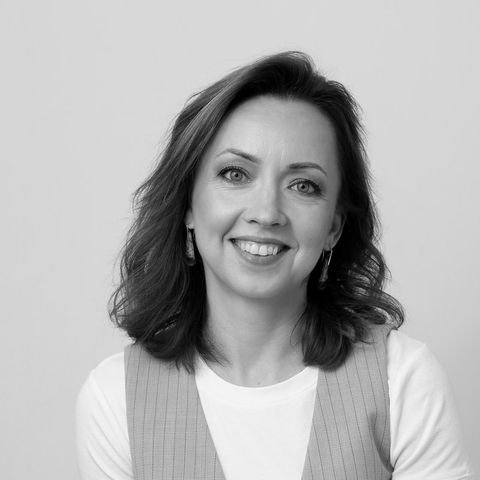
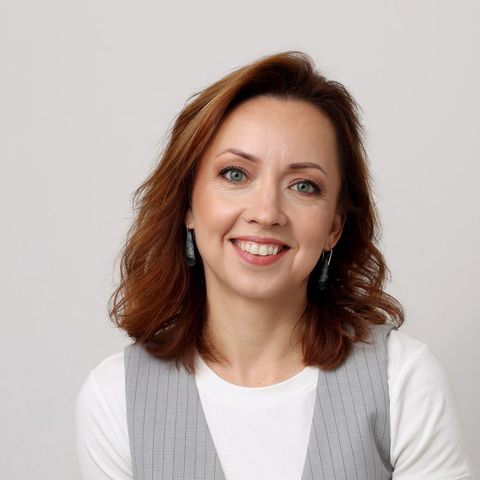
Lena Zhukova
founder of OKR Poland
For more than 20 years she has helped company boards in Poland, Germany, Switzerland, Sweden and the USA build and implement strategies. She has implemented OKRs in dozens of organisations from 50 to several thousand people: in IT and software production, manufacturing, logistics, aviation, healthcare, e-commerce, game development, services, banking and local government. She has led transformation in several organisations and built and run teams.
She has run training and workshops for 15 years and trained more than 2,000 people from Poland, Germany and Switzerland. Since 2019 she has taught on postgraduate programmes at the Jagiellonian University, among other things workshop facilitation and working with groups. She has taught classes at Gdańsk University of Technology and the WSB University. She is a mentor and shares her experience at conferences in Poland, Europe and the USA.
Talks and podcasts
- 2025
- Founders Mind X, Warsaw · Social Swift MeetUp, Gdańsk · Przedsiębiorcze Trójmiasto, Gdańsk
- 2024
- IIBA Poland Summit, Warsaw · Founders Mind VIII, Warsaw · PAM Summit, Kraków · IIBA ConnectBA, Gdańsk · Founders Mind VII, Warsaw · OKRx Summit (Turkey) · IREB exploRE, Warsaw · FoundersCamp, Rome · OKRs.com (USA)
- 2023
- IIBA Poland Summit, Warsaw · OKR Meetup, Gdańsk · Agile Bez Scenariusza podcast · Founders Mind V, Warsaw · Building Business Capability, Las Vegas · Piwo Między Projektami, Gdańsk · OKRs Q&A podcast (USA) · OKR Forum (Amsterdam)
Companies we have worked with
We also record “Coffee with OKRs”: 60 conversations about OKRs in practice, all of them in the Knowledge section (in Polish).
After the workshop
After two days you are not left on your own
- 1
Support with the implementation
Want to implement OKRs in your company or team? We support companies from the very idea of an implementation. Write to hi@okrpoland.pl and let's talk about yours.
- 2
One-to-one consultations
Need ongoing support, or want to talk something through? Let's meet about your challenges. An e-mail to hi@okrpoland.pl is enough.
- 3
Support from the workshop group
You share your challenges with the group of participants and get comments and tips from them.
Sign-up
Sign up for the workshop on 26–27 November
PLN 2,400net per person, plus VAT
The price covers two intensive workshop days, materials to use in your own company, access to the knowledge base and the support group. The workshop is held in Polish.
Want to implement OKRs across the whole company, with us inside?
The workshop teaches the method. In an implementation we are in the company for a full cycle, from verifying the problem to the pilot.