Coffee with OKRs · 4 min read
You don't implement a tool, you build a habit, so you start with one small group
The first quarter of this implementation was worked through by 4 people from the board, and nobody else in the company knew about the method. Not out of secrecy. Because of a question that had to be answered first: would they even manage to sit down for these meetings every week.
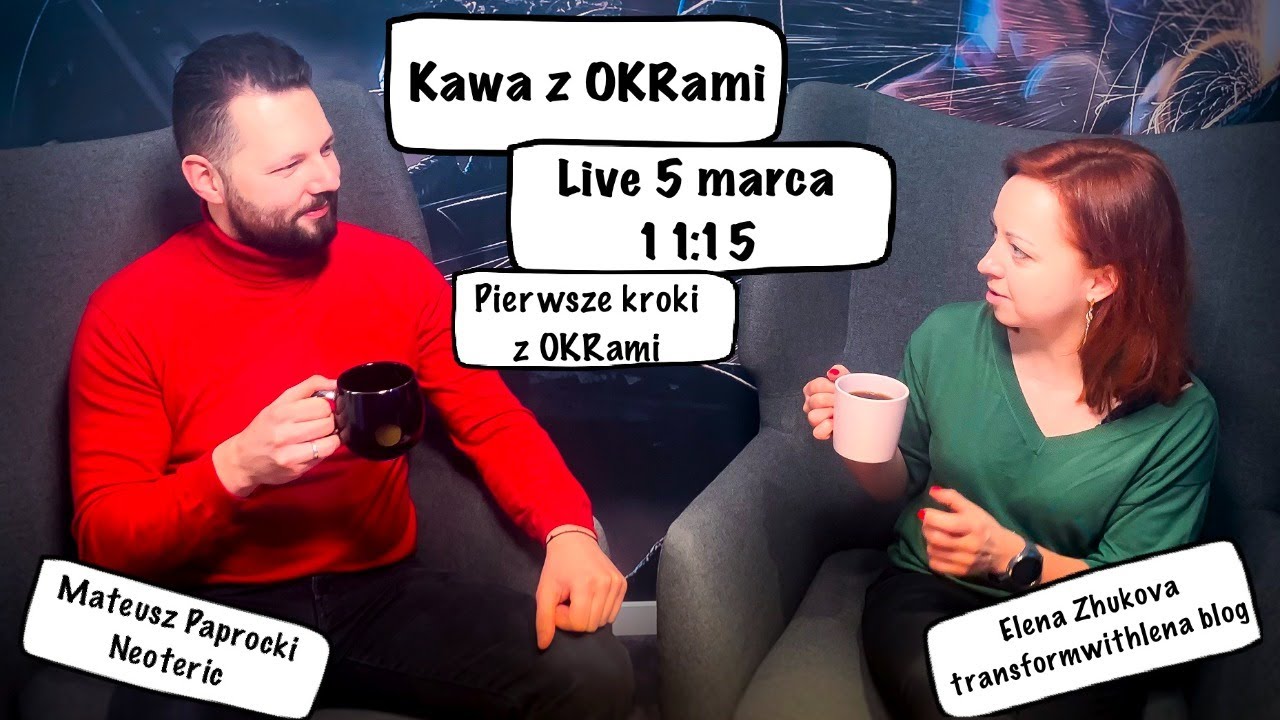
From the episode · in Polish
The channel's oldest episode, entirely about getting started
The whole episode is laid out as seven first steps, and the list closes at the thirtieth minute. The pilot team and the rising cost of each additional team come at the ninth minute, the thread about habits at the twelfth, choosing the person to lead the implementation at the eighteenth, and the trap of objectives that describe activity instead of results at around the twenty-fourth. from 00:18:14
 The recording is being edited. Leave your address and you'll get the link when it's ready.
Implementing OKRs means changing a set of the organisation's habits, not installing a tool, so it follows the same rules as changing personal habits: a little at a time and regularly. Nobody rearranges their whole life on a single Monday, yet companies try exactly that, opening the method up to every team from day one. Hence the recommendation from this episode: one small pilot team that works through a full quarter with it. The reason can be counted. The more teams work in this rhythm, the more meetings there are, the more time goes into keeping an eye on what happens in them, and the more people have to be able to run them. The cost rises with every additional team, and a habit can't be bought wholesale anyway.
The most important item on the list of first steps is not choosing a tool or a meeting format, but choosing the person who will lead it. That person needs two things: real power to get things done in the organisation and responsibility for a piece of the strategy. Willingness and a free hand are not enough on their own, and the most common counter-example is someone appointed because they happened to be available, who doesn't feel the subject and lacks clout. In that set-up the implementation is unlikely to work. Behind this stands a second, harder point: if the board has no time for strategic matters, it means it is so busy with the day-to-day that OKRs are not its biggest problem right now. In one of the set-ups described, the board divided this explicitly: one person is responsible for the current year, another for the horizon beyond a year, and the quarterly objectives plug into the first role.
The biggest trap of first objectives is describing activity instead of results. At the end of the quarter you are then left with a sentence about how hard we tried, not a fact. That is why first objectives should be as simple as possible and decidable by data, 1 or 2 per quarter, no more. Sometimes such a statement looks trivial: in a company so absorbed by the day-to-day that there was no room left for strategic thinking, the key result for the quarter became 12 strategic meetings, one a week. It worked precisely because it could be settled by data rather than by discussion. And one last thing we say plainly in this episode: during the first quarter you will be very tempted to rewrite the objectives or change them completely. Don't, because the consequences of a badly set objective are learning material here. After that the process improves by one small thing per quarter, and that is exactly how we improve it, instead of staging a revolution after every cycle. After a few quarters, what comes out of it works better.
Takeaways
Four things to take from this episode
- 01
Start with one group and give it a full quarter
In the start described here, that was 4 people from the board for 1 full quarter, without showing the method to the rest of the company. The point is to check whether a weekly rhythm can be kept up before anyone starts scaling it.
- 02
The cost of implementation rises with the number of teams
Every additional team means more meetings, more time spent keeping an eye on them and one more person who has to be able to run them. Handing the method to everyone at once buys that cost in the first week.
- 03
Choosing who leads matters more than choosing the tool
What is needed is real power to get things done and responsibility for a piece of the strategy. Someone appointed because they had a free hand doesn't feel the subject and lacks clout, and then the implementation is unlikely to work.
- 04
One or two objectives, decidable by data
The statement should let you say yes or no at the end of the quarter on the basis of data. An objective that describes activity leaves you with a story about effort.
The whole topic in one place
What are OKRs? A refresher
This text is about getting started and it ends where the first quarter ends. If you are missing the layer underneath, why we are doing this at all and how goals connect with strategy, we have gathered the whole topic in one place, together with a list of the other episodes on the basics.
Author


Lena Zhukova
founder; strategy workshops, quarterly sessions
Founder of OKR Poland. For twenty years she has worked with boards of companies from 30 to a few thousand people; she wrote dozens of strategies with them and helped implement them in more than 40 organisations.
Next texts by e-mail
The OKR Poland newsletter
We write when we have something to say. To start: eight hours of recording on preparing a company for strategy workshops, plus the OnePager.