Coffee with OKRs #45 · 6 min read
The team isn't delivering: six times the source was execution, three times strategy
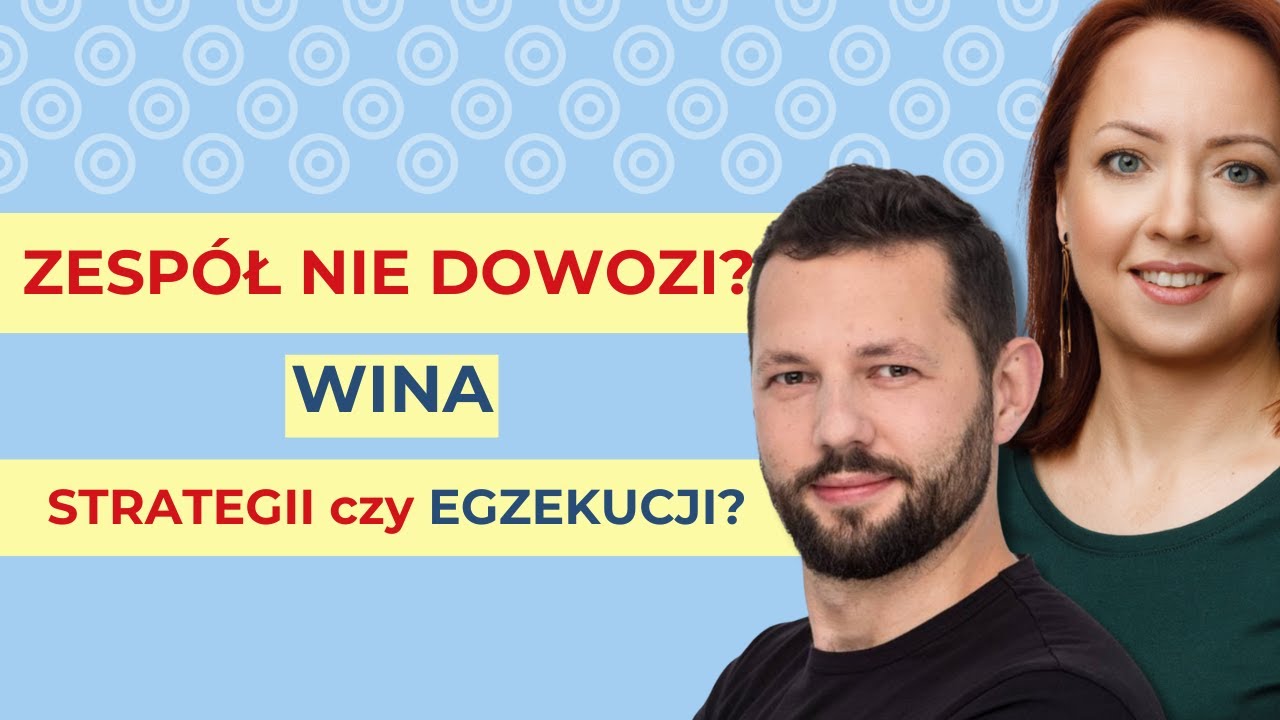
The team asks for its scope of work to be cut. You take this to the people who set priorities and hear that everything is important and everything is needed yesterday. It looks like a situation with no way out. In this episode we tested live which side such situations really stem from.
From the episode · in Polish
An exercise done live, with no result prepared in advance
In the recording we take the six symptoms one by one and keep score for each. Along the way there is the split of the company's work into two streams, the example of a quarterly plan for thirty leads that produced two, and the distinction between ill will, slipping standards and a defence mechanism that kicks in under unfavourable conditions. The part about why a company going through one framework after another lands on the same problems every time closes the conversation. from 00:51:23
 The recording is being edited. Leave your address and you'll get the link when it's ready.
The complaint that a team isn't delivering sounds like a diagnosis, but it is only a symptom. You can trace it to both sides of the organisation at once. From the top: nobody has decided what matters more than what. And from the bottom: the team has no working mode, no planning skills and no habit of looking at the effect instead of the task. We turned this into an exercise: we took the six symptoms boards describe to us most often and, one by one, considered where the source of each lies. The score stopped at three points for strategy and six for execution, because some symptoms counted towards both sides. It was not the result we expected.
The split we started with changes the most. As long as all the work sits in one bag, everything looks equally important and there is nowhere to start a conversation about order. So mark every task in the company with one of two colours: it comes from the strategy, or from maintaining the current state. Only once you have these two streams can you decide how much time goes to one and how much to the other. Without this, the team's request to cut scope runs into the answer that everything is a priority. Close to this sits the second symptom: people don't know why they are doing a given thing, and explaining the purpose comes down to saying the board ordered it. Here the source lies on both sides: either the direction isn't written down anywhere, or it is, but nobody tells the same story.
Two of these six symptoms look like success, and that is why they are dangerous. The first is every task ticked off in green while everyone feels we are standing still. It usually means the team works on tasks instead of effects and has one idea for reaching the objective instead of several hypotheses to test. Without alternatives, all that is left is doing more and doing it faster. The second is overtime taken on out of sheer enthusiasm, which a company can easily take for commitment. It is a symptom of capacity being badly split between strategy and the day-to-day, and running a company is a marathon, not a sprint. You then have to either cut the work in one of the streams or increase capacity. None of this, however, can be seen from inside your own team, and that applies to us too. So the simplest thing you can do this week is invite someone from outside to your meetings and ask them to observe. It doesn't have to be a consultant; a person who manages another team is enough.
Takeaways
Four things to take from this exercise
- 01
A symptom doesn't point to the culprit
The same symptom can honestly be traced both to a lack of strategy and to a lack of execution. Before you put forward a claim about the team, check both sides in turn, because in our exercise six symptoms produced nine verdicts.
- 02
First two streams, then the order
Work that comes from the strategy and work that maintains the current state are two different things. Without that split there is no point of reference, and prioritising is impossible however good the intentions.
- 03
In the unknown, measure the step before the result
The plan assumed thirty leads in the quarter, many channels were tested, and two came out. Not because the work was bad, but because there was no data from which anything could be predicted. In that case, measure what you have control over: conversations and meetings booked.
- 04
Objectives don't break anything, they only reveal
Until a company sets itself objectives, nobody has a reason to check whether the teams work effectively and have the skills. That is why each new framework ends up with the same problems: it supplies only the layer of direction, and the rest is still left to do.
The whole topic in one place
Why doesn't the team deliver on its goals? Looking for the cause
This exercise stops at identifying the source and deliberately goes no further. If in your case it pointed to execution, the rest of the work is set out in that text: four areas that can be put in place before the quarter starts, and the checks that tell you one of them isn't working. We have also gathered every episode from this thread there.
Author


Lena Zhukova
founder; strategy workshops, quarterly sessions
Founder of OKR Poland. For twenty years she has worked with boards of companies from 30 to a few thousand people; she wrote dozens of strategies with them and helped implement them in more than 40 organisations.
Next texts by e-mail
The OKR Poland newsletter
We write when we have something to say. To start: eight hours of recording on preparing a company for strategy workshops, plus the OnePager.